These are some of the things that I have learned over the years and that even today are still useful to me when it comes to drawing and learning. Some of them I have learnt by myself, others have been taught by my teachers or I have learnt them from other artists. I hope that whether you are a beginner or a more advanced artist, they will be useful 🙂
1. Practice, practice, practice
The more you practice, the more you will improve. No matter how much talent you are born with, it is worthless if you don’t put in the effort and time to learn. It’s just that not all practice is the same.
2. Fundamentals
There are several aspects of drawing and painting that can be practised, such as the fluidity of the lines, proportions, volume, colour,… It is important to do exercises focused on the aspect in which we want to improve instead of trying to tackle everything at once.
3. References
It is very important to start drawing by copying, to study what we want to represent in order to understand its structure and to be able to draw it by heart or with more agility. I must clarify that it is not obligatory to draw without references. Moreover, when we study an object, face or animal, we simplify the information, we do not keep everything.
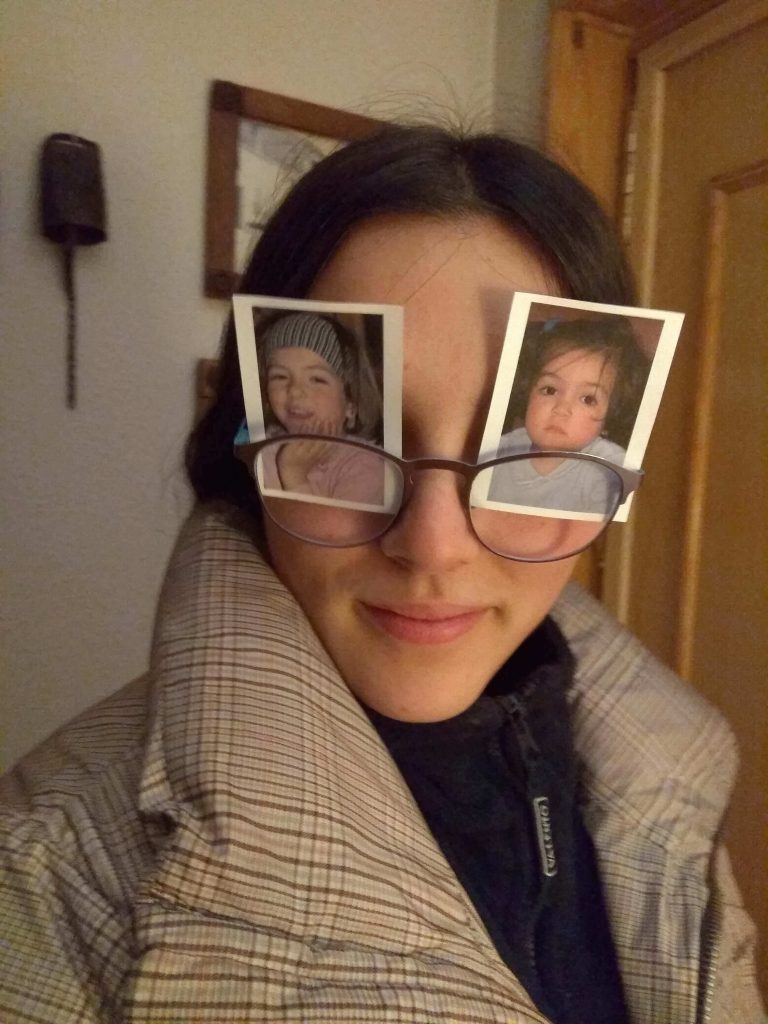
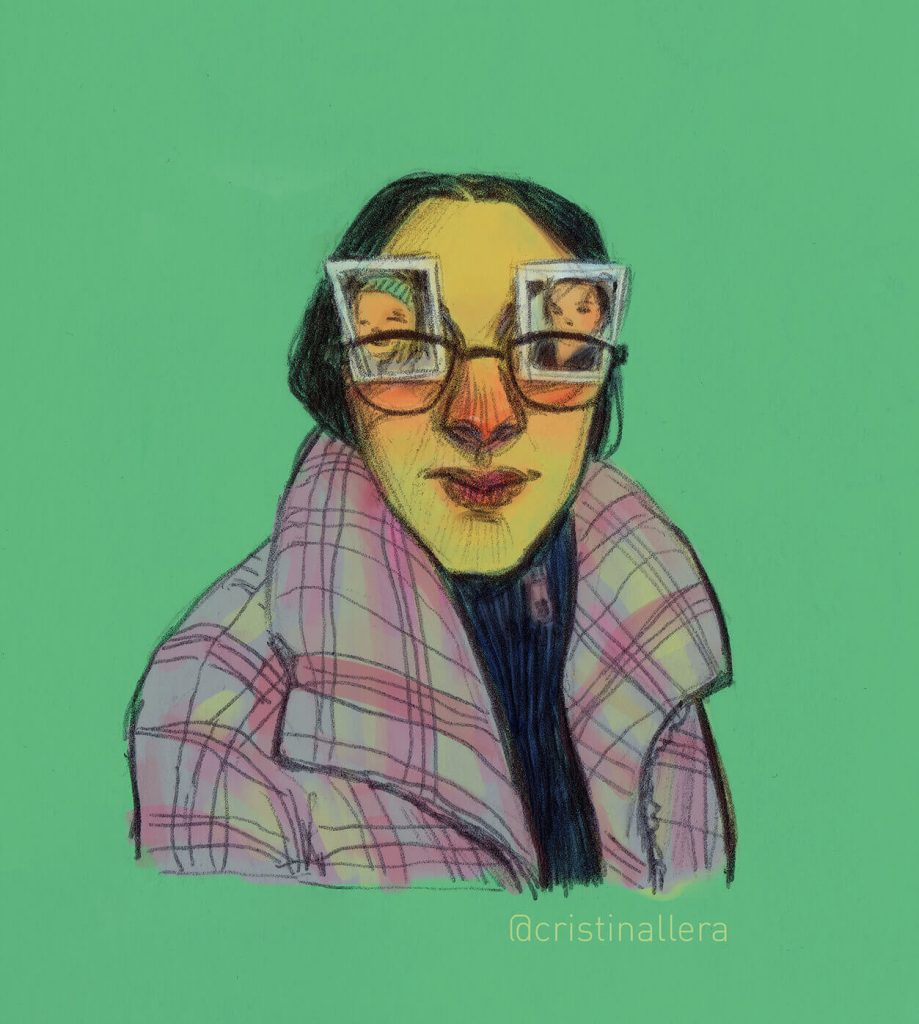
For realistic drawing or painting, reference images will be essential, but if you want to make a stylised drawing, you will learn to take from the references only what you are interested in. For example, from this photo I took the pose and the elements, but I stylised the features and changed the colour completely.
4. One vs. ten
In order to learn how to fit the proportions, it is better to do ten portraits in an hour than one very well done one. You have to bear in mind that in order to learn you have to do studies, and not all the drawings have to be beautiful and perfect.
5. Use a stopwatch
It has happened to me many times that I have started a drawing with the idea of dedicating little time to it and I have ended up spending hours on it. Therefore, if what you really want to do is study, it is advisable to have a stopwatch or a clock nearby.
At the beginning you may feel overwhelmed, but again I remind you, it’s OK if you don’t love the result, it doesn’t have to be perfect, and it doesn’t have to be exhibited in a museum. This pressure of having a time limit will make you simplify and little by little it will be less difficult to see what is important and characteristic of the reference you are copying.
6. From the general to the detail
It is very common for artists to start drawing and start giving details very early on, only to realise a while later that the eyes are separated, the nose is crooked or that a foot is coming off the paper if the leg is not deformed. That’s why it is important to start with the general structure of the drawing and then start shading and adding details.
7. Blank canvas aaaah!!!
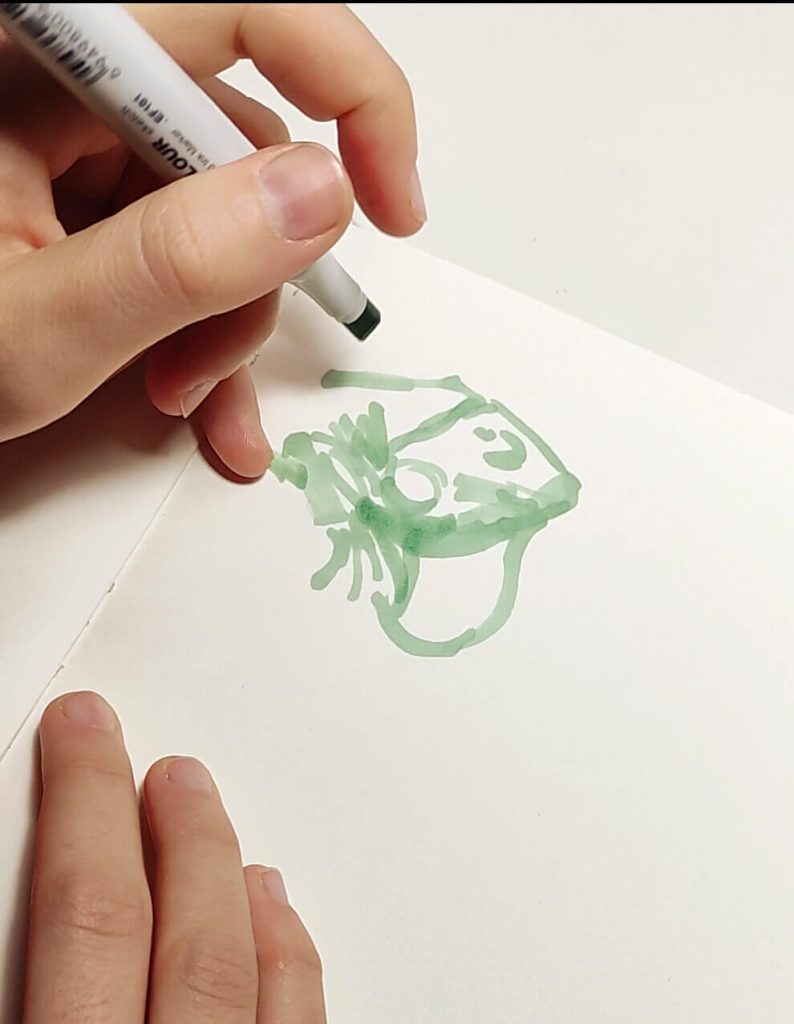
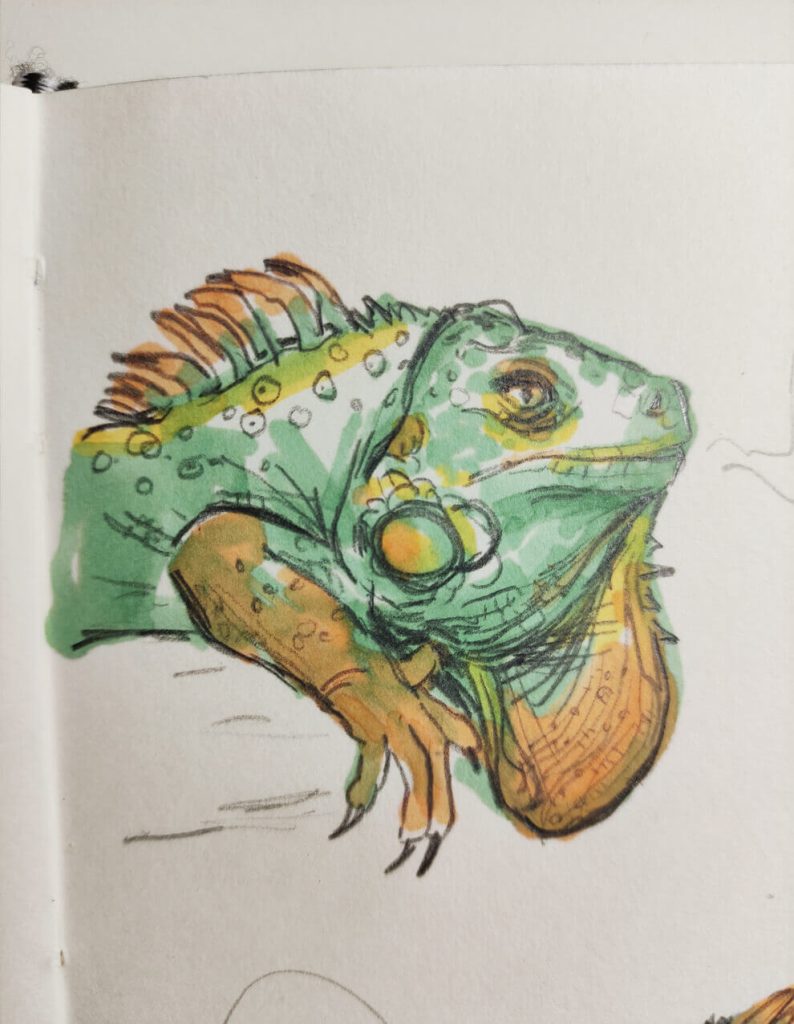
You can make the general shape with a light pencil or marker and draw the details on top with a darker material.
8. Copying from life
Whenever possible, I recommend drawing from life, i.e. instead of looking at a photograph, copy from a real-life reference. This is more complicated to do, and will force us to look more closely and train our observation.
9. “Abstracting”
To learn to observe and copy more faithfully, it is very useful to stop seeing faces as faces, objects as objects, and to start looking at the shapes, distances, angles, that make up these elements. An eye is not an eye, but a sphere with a more sunken circle, which cannot be seen in its entirety because it is covered by another curved surface with folds. You have to see things as abstract forms.
10. Negative space
Something that can help us a lot when copying a reference is to look at the negative space, at the gaps. For example, if we are copying a sculpture, we would look at the shape that forms in the air around it. This helps us to change our gaze and to analyse the proportions in a different way, seeing things that we were not able to appreciate before.

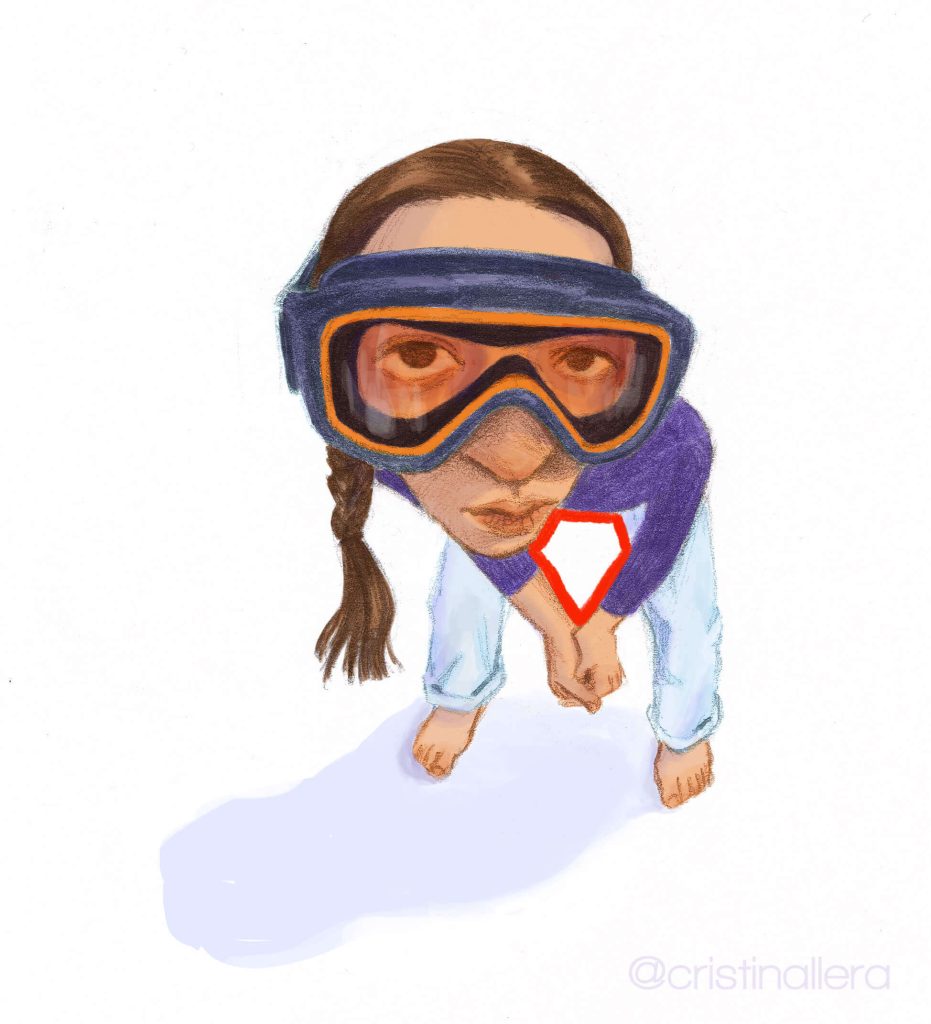
Here is a link to a free downloadable worksheet with exercises to practise the drawing I have created. You can print them or use them in your favourite digital program. You can get to them by clicking on this link.
I hope you liked this post and that it will be useful for your practice. I will upload more tips soon.